
Information and Communications Technology
Find out how the school nurtures future-ready digital learners through purposeful use of technology, meaningful learning experiences and the development of digital literacies, 21st Century Competencies and responsible digital citizenship.
Information and Communications Technology
Department Vision (in line with Edtech Masterplan 2030)
Every student, a digitally-empowered, future-ready learner and innovator
Every teacher, a technologically-adept, collaborative learning designer
Department Overview
The Ministry of Education’s Educational Technology Plan guides the school’s vision of nurturing Future-Ready Digital Learners who are confident, responsible and empowered to thrive in a rapidly evolving digital world. We believe that the purposeful integration of educational technology can strengthen students’ intrinsic motivation, promote self-directed learning, and deepen engagement in meaningful learning experiences.
Technology is harnessed purposefully to enhance teaching and learning, enabling students to deepen subject mastery while developing important 21st Century Competencies such as critical and adaptive thinking, communication, collaboration and responsible decision-making. Through authentic and student-centred learning experiences, students develop digital literacies and dispositions needed to navigate the future with confidence and resilience.
To create a learner-centred digital environment, the school focuses on the following key areas:
Harnessing Technology in Curriculum and Pedagogy
Leveraging educational technology and digital platforms to enrich teaching and learning experiences, support differentiated instruction, and promote active and collaborative learning.Enhancing Digital Literacies and Technological Skills in Our Learners
Equipping students with the knowledge, skills and confidence to use digital tools effectively, think critically about information, and create meaningful digital content.Nurturing Responsible Digital Citizens
Guiding students to use technology safely, ethically and responsibly, while developing positive online behaviours and strong digital citizenship values.Developing Teachers’ Capacity in e-Pedagogy
Building teachers’ competencies in integrating technology meaningfully into lessons through professional learning, collaboration and continual innovation in pedagogical practices.Constructing an intelligent, responsive and digitally-equipped learning environment
To have intelligent, flexible, multi-functional learning spaces to meet a variety of teaching and learning needs; To have digitally connected learning spaces to support seamless communication, teaching & learning.
Department Members
Information and Communications Technology department members and roles
Head of Department | |
Mdm Pauline Quek / Mrs Pauline Soh | |
Subject Head | |
Mr Sim Bee Keat | |
Members | |
Mr Teo Guo Shun Eugene | Ms Jayne Pan Ting |
Mr Danny Asmara Bin Rahman | Ms Wiu Zhen An |
Mr Darren Wong Wei Xiang | Mr Wong Song Pei |
Mdm Hartini Sanin | Mdm Lekhaadevi |
Mr Tok Wei Yuan | |
Mr Lew Jia Chien (ICT Manager) | Ms Smitha (ICT Trainer) |
Mr Koh Geng Kai (Desktop Engineer) | Mr Mohamed Razi Bin Mohamed Sahar (Desktop Engineer) |
Key Programmes
Harnessing Technology in Curriculum and Pedagogy
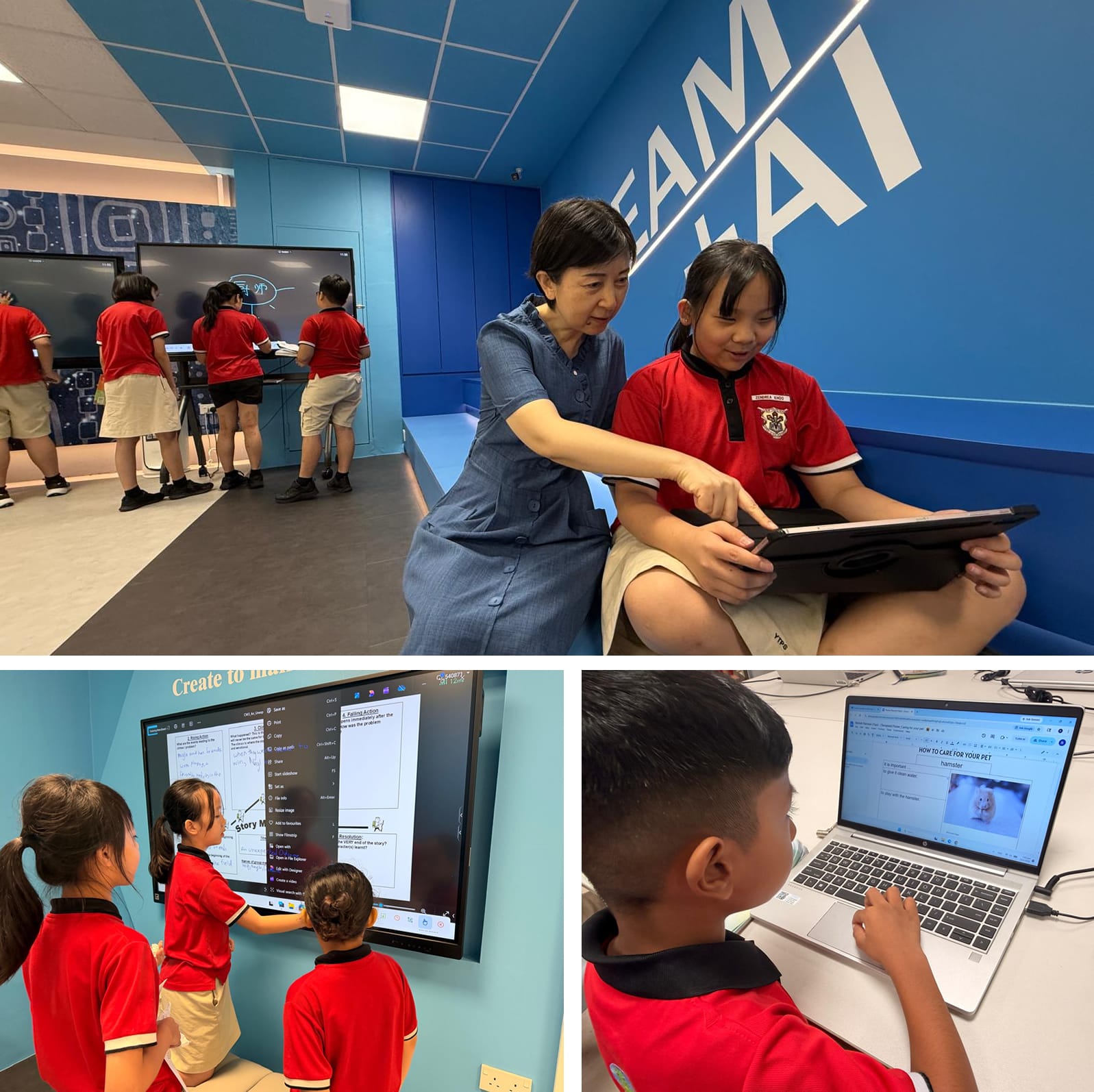
The school harnesses technology purposefully to enhance teaching and learning, in alignment with MOE’s Educational Technology strategic thrusts. Through platforms such as the Singapore Student Learning Space (SLS), students engage in active and blended learning experiences both in and beyond the classroom. AI-enabled features within SLS support the customisation and personalisation of learning, enabling students to learn more effectively and at their own pace. Teachers leverage pedagogically-sound EdTech tools, thoughtfully designed SLS lessons and carefully curated digital resources to foster greater student agency, collaboration, critical thinking, and self-directed learning.
Enhancing Digital Literacies and Technological Skills in Our Learners
The school is committed to developing students’ digital literacy and technological skills to prepare them for a rapidly evolving digital world. In alignment with MOE’s direction to infuse Digital Literacy and Technology Skills (DLTS) across the total curriculum, students are provided with meaningful learning experiences that integrate technology into both academic and co-curricular contexts.
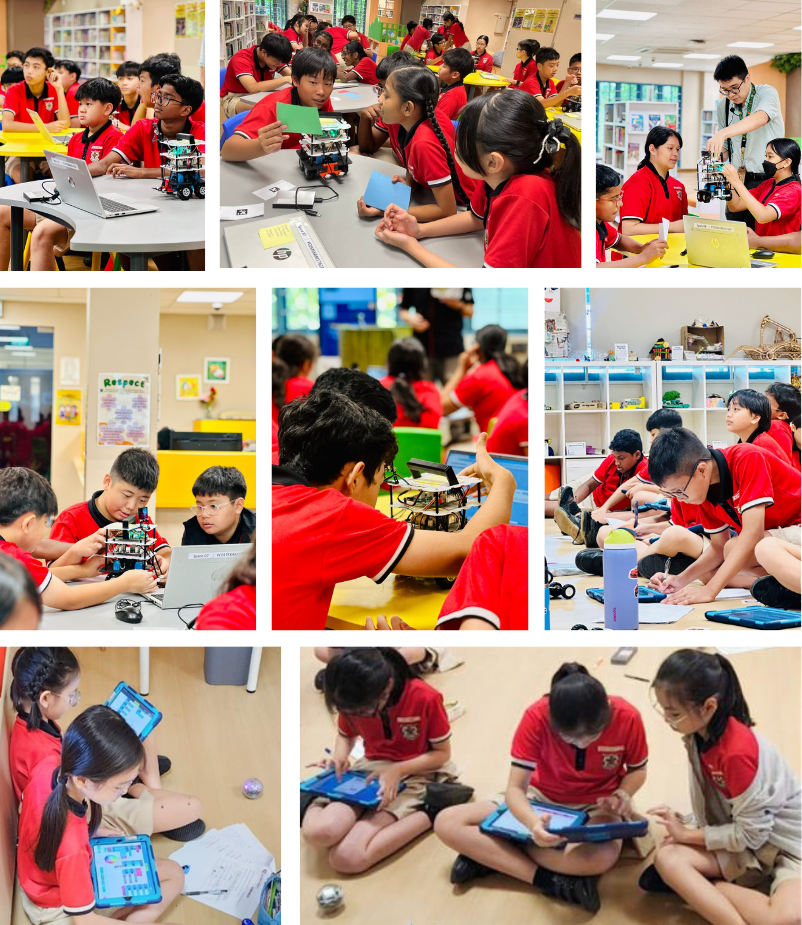
At Yew Tee Primary School, we believe technology is a powerful tool for positive change. Through a structured six-year spiral progression, students progressively develop digital literacy, computational thinking, coding, and an understanding of emerging technologies through authentic, real-world learning experiences. Guided by the theme “Technology for Good,” our signature robotics programme combines creativity, collaboration, and problem-solving as students design solutions, explore ideas, and apply technology meaningfully to real-life contexts. From foundational computational thinking in the lower primary years to more advanced AI-driven applications in the upper primary years, the programme nurtures confident, adaptable, and future-ready learners equipped to thrive in a technology-driven world.
Lower Primary: Awareness & Empathy
Students learn to view technology as a tool to build awareness and show care for the people and community around them.
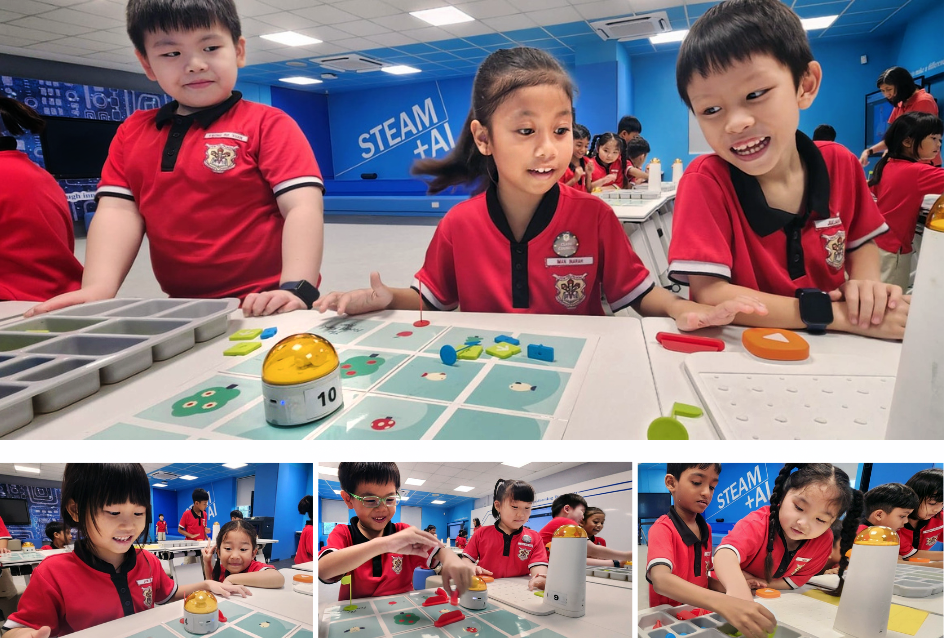
Primary 1 | The Pet Rescue Mission: Using Matatalab robots and screen-free physical blocks, students learn the foundation of Coding and Programming. They arrange blocks to guide a robot through a rescue mission (from the site to the vet), understanding that the specific order of instructions dictates a robot's movement.
Primary 2 | Keeping the Environment Clean: Students leap into digital block-based programming using Scratch Junior on iPads. They build an interactive game from scratch where they must code "rubbish" to disappear, learning to use logic commands like loops and conditionals.
Middle Primary: Driving Sustainability
Students focus on Sustainability by applying technology to solve real-world environmental challenges.
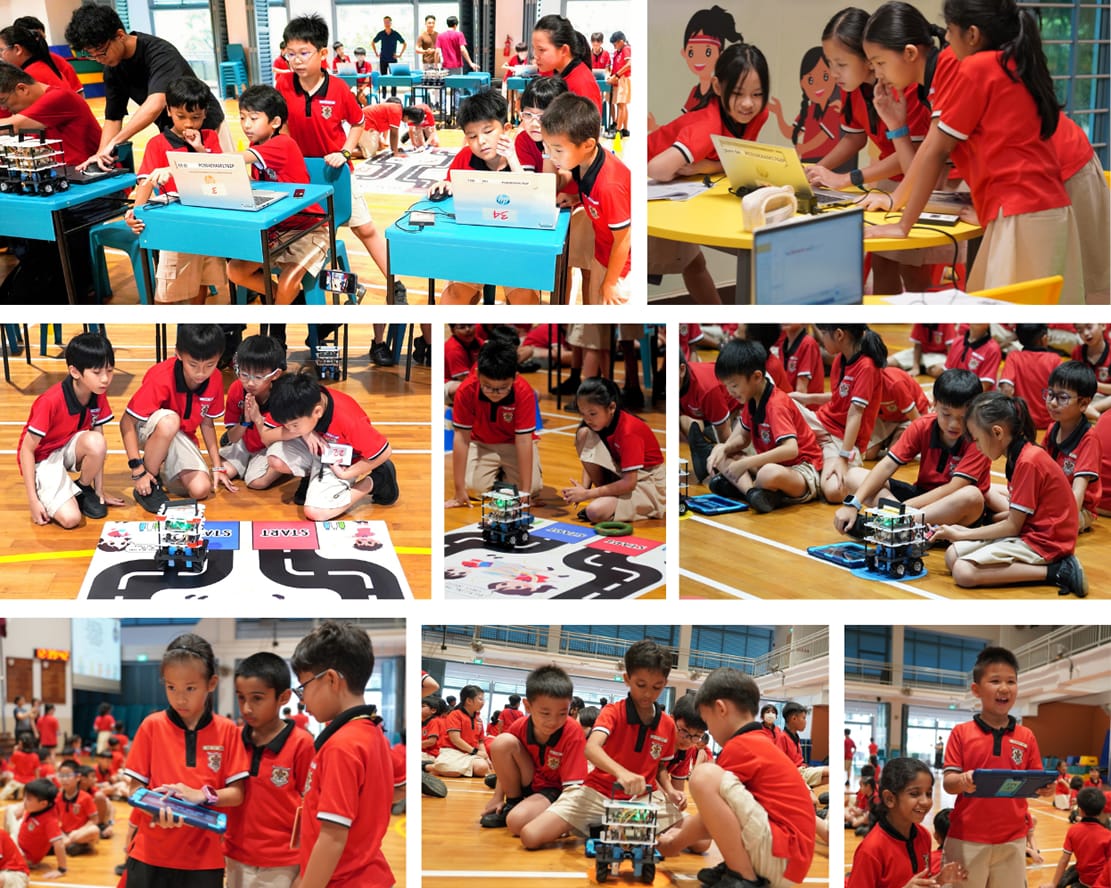
Primary 3 | The Manual Recycling Challenge: Students are introduced to the Smorphi robot platform. They use manual remote control to navigate it as a recycling truck through an obstacle course, picking up metal "paper clips" using magnets to build foundational spatial reasoning and an intuitive understanding of how a physical robot moves in a real environment.
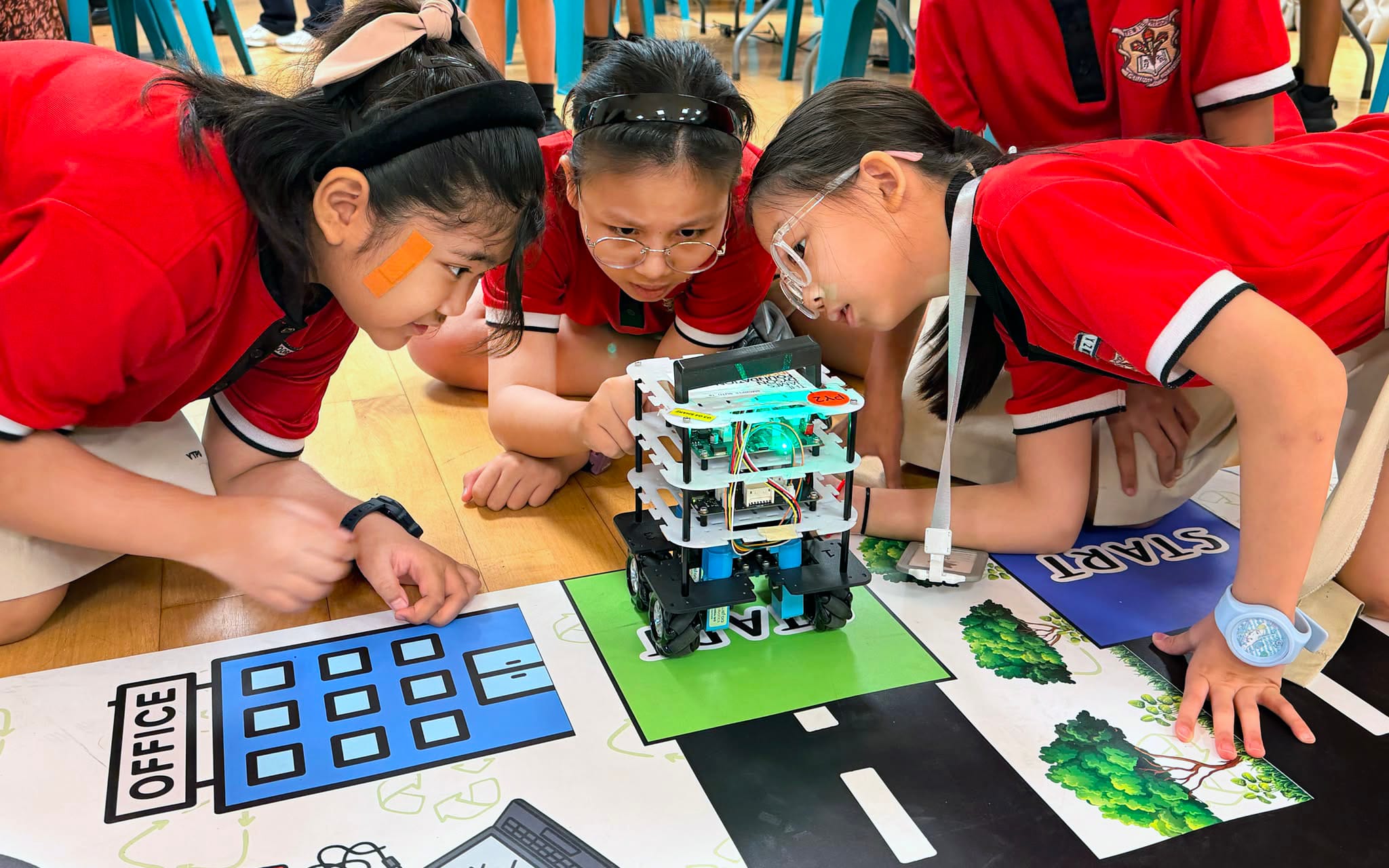
Primary 4 | The Autonomous Recycling Truck: Students move from manual control to autonomous logic using Blocky software (Arduino interface). They program their recycling truck to move independently along a designated route from the trash pick-up point to the recycling plant, applying mathematical reasoning to ensure path accuracy.
Upper Primary: Social Innovation & AI
Students grow as Social Innovators by using technology and Artificial Intelligence (AI) responsibly and creatively to understand community needs, solve authentic problems and improve the lives of others.
Primary 5 | Mastering the Programming Toolkit: Through the IMDA Code for Fun programme, students master a comprehensive toolkit of coding constructs using the Sphero BOLT+ robot. They learn advanced logic, including variables and functions, while discovering how emerging technologies like AI influence daily lives.
Primary 6 | AI-Powered Social Solutions: Students apply their cumulative skills to solve a social challenge: assisting the elderly with utensil returns. Using the Smorphi platform and Husky cameras, they "train" their robot through Computer Vision to recognise visual cues—such as a hand gesture—to stop its patrol or move to a tray return area.
In addition to this project, P6 students embark on the IMDA AI for Fun modules, exploring Generative AI for ideation and further deepening their skills with smart robots. They explore how computer vision and sensors allow machines to solve complex problems and to evaluate how reliable their AI model is, ensuring it works accurately for real human needs.
Nurturing Responsible Digital Citizens
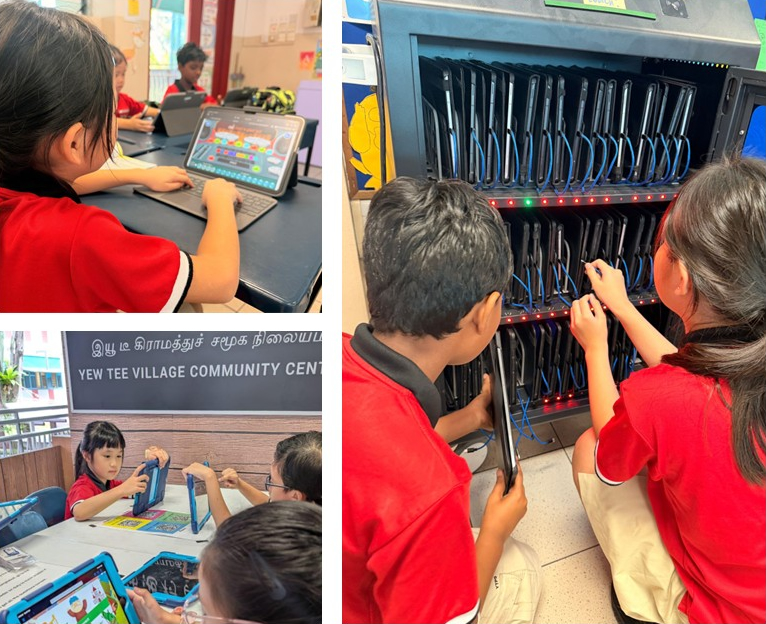
Students are equipped with the knowledge and awareness of topics related to Cyberwellness so that they know how to be safe and use technology responsibly. They learn to be responsible digital citizens through Form Teacher Guidance Periods (FTGP) and Character and Citizenship Education (CCE) lessons, as well as from short bite-sized presentations during morning assembly.
In addition, students engaged in experiential learning activities during Cyberwellness Awareness Week. Through these activities, students are more aware of issues such as cyberbullying, excessive screen time and navigating the internet safely and responsibly.
Developing Teachers’ Capacity in e-Pedagogy
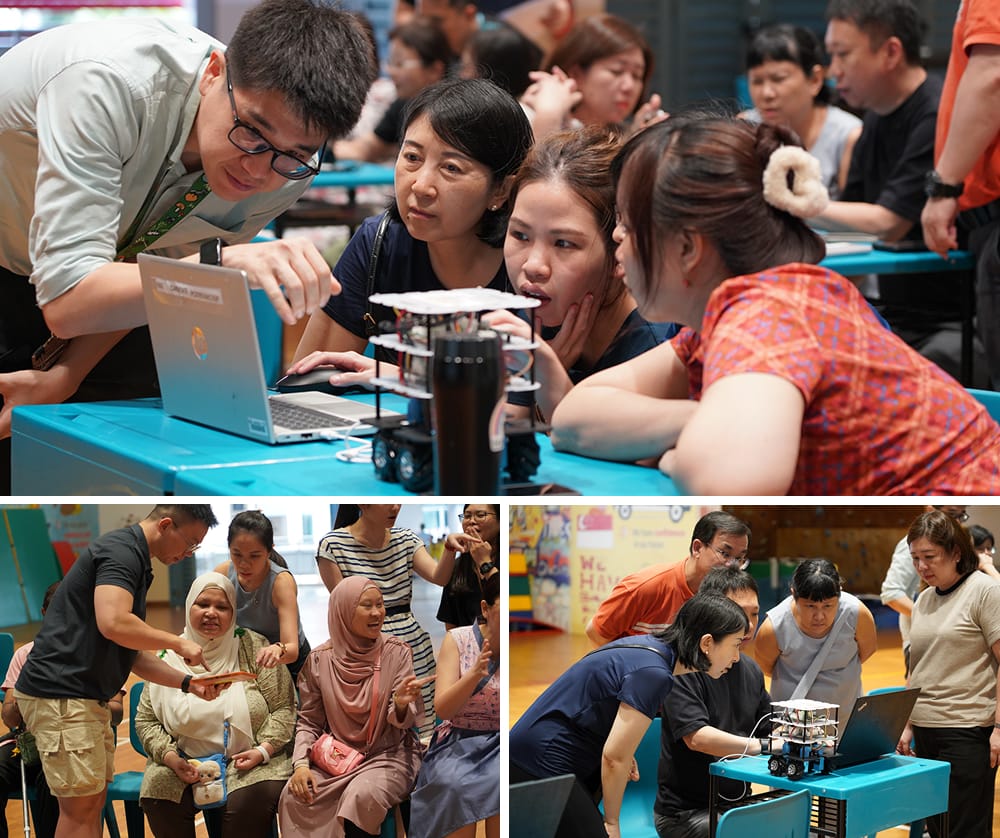
The school adopts a three-pronged approach — school-wide, level-based, and just-in-time support — to strengthen teachers’ competencies in e-Pedagogy. Through these professional learning opportunities, teachers are equipped to harness technology meaningfully to support active and engaged learning. A key focus of the professional development programme is building teachers’ capacity to analyse and interpret students’ learning and assessment data to design targeted interventions and continually refine learning experiences to better support student growth and learning outcomes.
Teachers also collaborate in teams during Timetabled Time to co-design, implement, and review lessons as part of an ongoing cycle of professional learning and improvement. Through these collaborative lesson design processes, teachers share effective pedagogical practices, deepen their understanding of student learning needs, and leverage technology purposefully to create meaningful and engaging learning experiences for students.
Constructing an intelligent, responsive and digitally-equipped learning environment
In line with MOE’s strategic thrust of constructing an intelligent, responsive, and digitally-equipped learning environment, the school has purposefully renewed and reimagined learning spaces to better support future-ready teaching and learning. Traditional computer laboratories have been transformed into the STEAM + AI Tinkering Lab and the Infinity Lab — flexible, technology-rich environments designed to promote creativity, collaboration, innovation, and active learning.
These spaces provide students with opportunities to engage in hands-on, inquiry-based learning experiences involving coding, robotics, computational thinking, design thinking, and emerging AI technologies. Equipped with interactive displays, collaborative workspaces, and mobile learning devices, the labs support both individual exploration and group-based learning approaches. The flexible design of the spaces also enables teachers to facilitate discussion, experimentation, prototyping, and authentic problem-solving in dynamic and engaging ways.